Shown once
The full key is shown when it is issued and never again. We store a hash; screens and responses show a masked prefix.
Developers
Every operation in DDXPay is a command or a query with metadata. From that one definition come the REST endpoint, the OpenAPI contract, the audit record and the AI tool — so the API is never a second-class citizen of the product.
REST API
/api/v1, with a published OpenAPI contract. Every build checks that the public contract stays backward compatible.Idempotency-Key. Retrying is safe; reusing a key for a different request is a conflict, not a second payment.payments.asset_not_supported, a human sentence in English and a correlation id for support.HTTP/1.1 400 Bad Request
Content-Type: application/problem+json
{
"title": "payments.asset_not_supported",
"status": 400,
"detail": "The combination USDT on ethereum is not supported.",
"correlationId": "00-0d382bbb59ce74377d7fc4957d0d39de-…"
}A real response from test mode: USDT has no official contract on the Ethereum testnet, so it is refused there.
API keys
A key starting with ddx_test_ works only with test data and simulated providers; ddx_live_ only with live data. The request body has no way to change that.
The full key is shown when it is issued and never again. We store a hash; screens and responses show a masked prefix.
Pick scopes from ready-made profiles or area by area. A key can never carry a right the person issuing it does not hold.
Rotating issues a successor while the old key keeps working for a while, and every key shows who issued it and when it was last used.
Webhooks
payment_intent.credited, refund.sent, withdrawal.failed, payout_run.completed, card_payment.disputed, fiat_transfer.completed and more.POST /hooks/ddxpay HTTP/1.1
Content-Type: application/json
DDXPay-Event-Type: payment_intent.credited
DDXPay-Event-Id: 01a1d959-2cb7-7a6b-bff1-447fce628717
DDXPay-Signature: t=1794643200,v1=5f2c9e…
# signed: HMAC-SHA256(secret, "<t>.<raw body>")
# the event id de-duplicates retriesSandbox
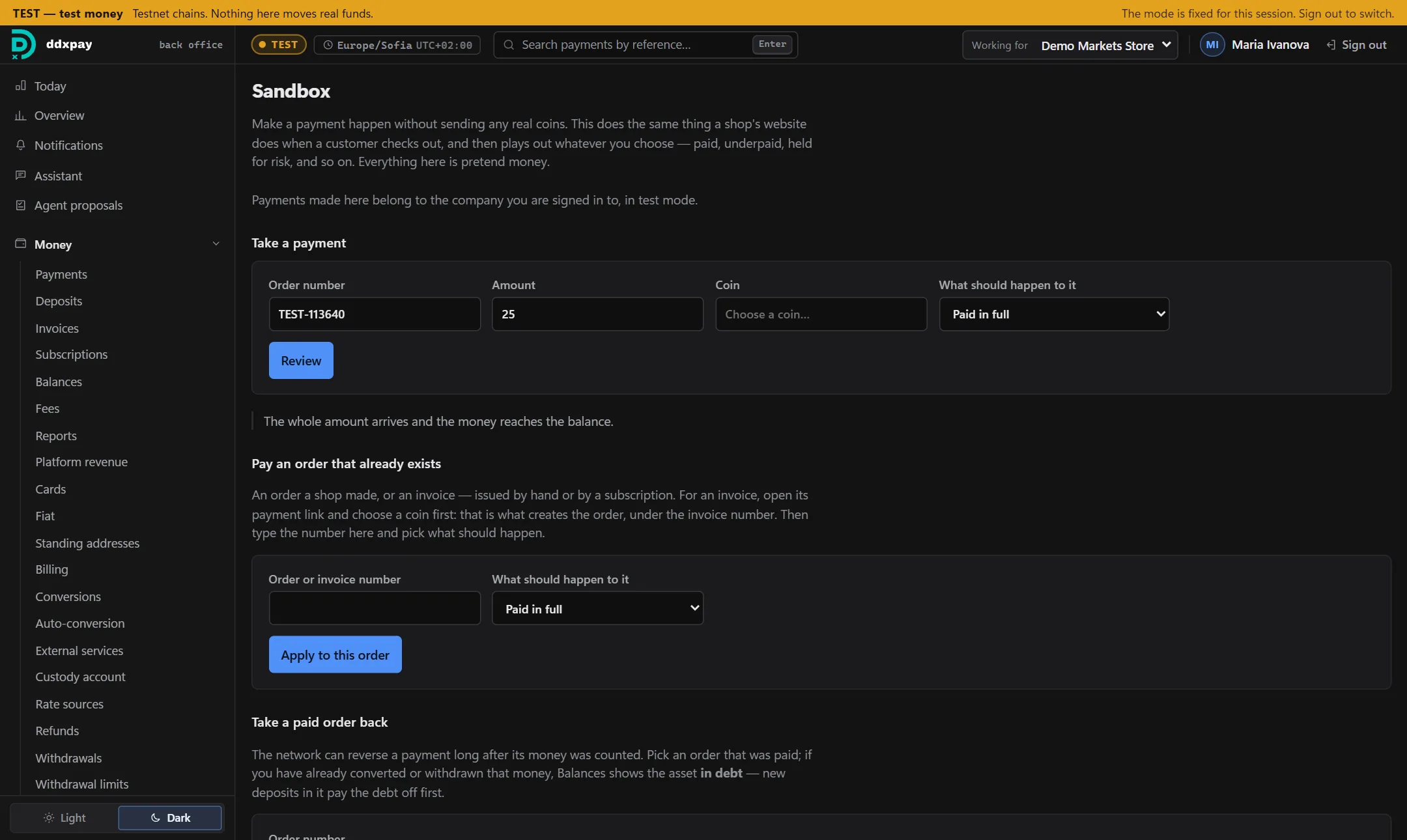
Test mode is part of the data model, not a separate copy of the product. It runs on public testnets — Tron Nile, Ethereum Sepolia, Base Sepolia and Bitcoin testnet — and every scenario goes through the same pipeline as live money.
/api/v1/test/payments/simulate.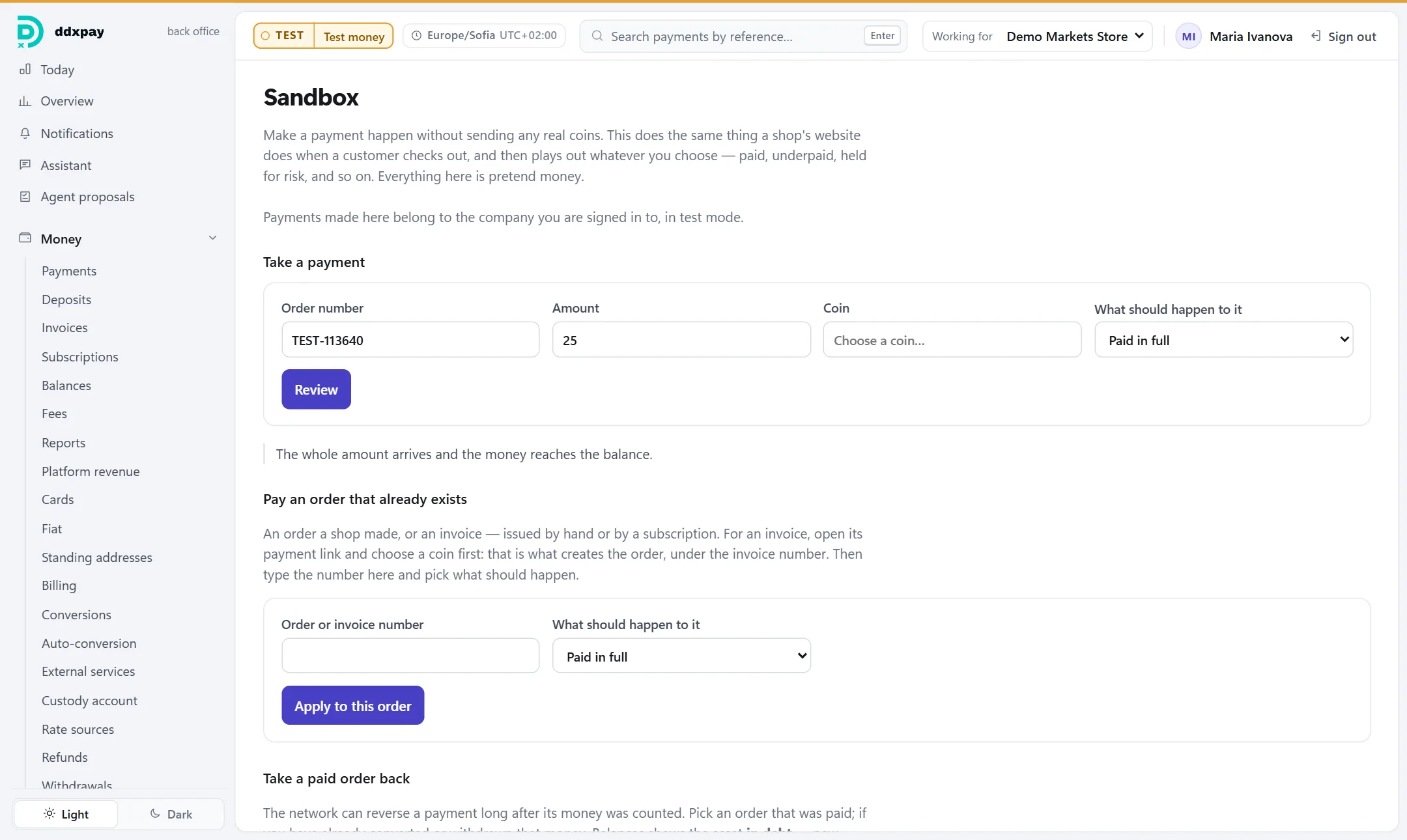
Node.js SDK
The SDK covers what a shop really uses — creating a checkout session, reading payments and verifying webhooks — and nothing that is not its business.
node:crypto and the built-in fetch.http:// base URL is refused, the key never goes into a URL, signatures are compared in constant time.npm package coming soon
import { DdxPay, verifyWebhook } from "@ddxpay/sdk";

const ddx = new DdxPay({
  baseUrl: process.env.DDXPAY_BASE_URL,
  apiKey: process.env.DDXPAY_API_KEY,
});

// Price in euros; the buyer pays USDT on Tron.
const session = await ddx.createCheckoutSession({
  reference: "order-10482",
  fiatAmount: 149,
  fiatCurrency: "EUR",
  assetSymbol: "USDT",
  chainName: "tron",
});

// session.token goes into the widget. It is shown once.
Checkout widget
One self-executing script with no dependencies. It renders into a container you choose and never writes raw HTML into your page.
<div id="ddxpay-checkout"></div>
<script
  src="https://api.example.com/pay/checkout.js"
  data-token="cs_…"
  data-base-url="https://api.example.com">
</script>
WooCommerce
For WooCommerce stores there is a ready plugin built on the same public API any integrator uses.
The buyer picks a coin on the DDXPay payment page; the order waits until the money is credited.
The plugin verifies the webhook, then reads the payment itself before it marks the order paid.
The order’s Refund button requests the refund in DDXPay. PHP 7.4+, no dependencies, both order-storage modes.
The plugin is not in the WordPress plugin directory yet; we provide the package directly.
MCP
DDXPay runs a Model Context Protocol server. An MCP client authenticates with an API key and gets exactly the tools that key and your AI settings allow.
# The back office shows this command, with a fresh key, once.
claude mcp add --transport http ddxpay \
  https://api.example.com/mcp \
--header "Authorization: Bearer ddx_test_…"We set up a test tenant for your team, with test keys and the sandbox, so you can integrate before anything touches real money.